Textile Art – From brushes to weaving
Arte Tessile – Dai pennelli alla tessitura
The works presented here as a preview are published in full in the hypertext book Arte Tessile
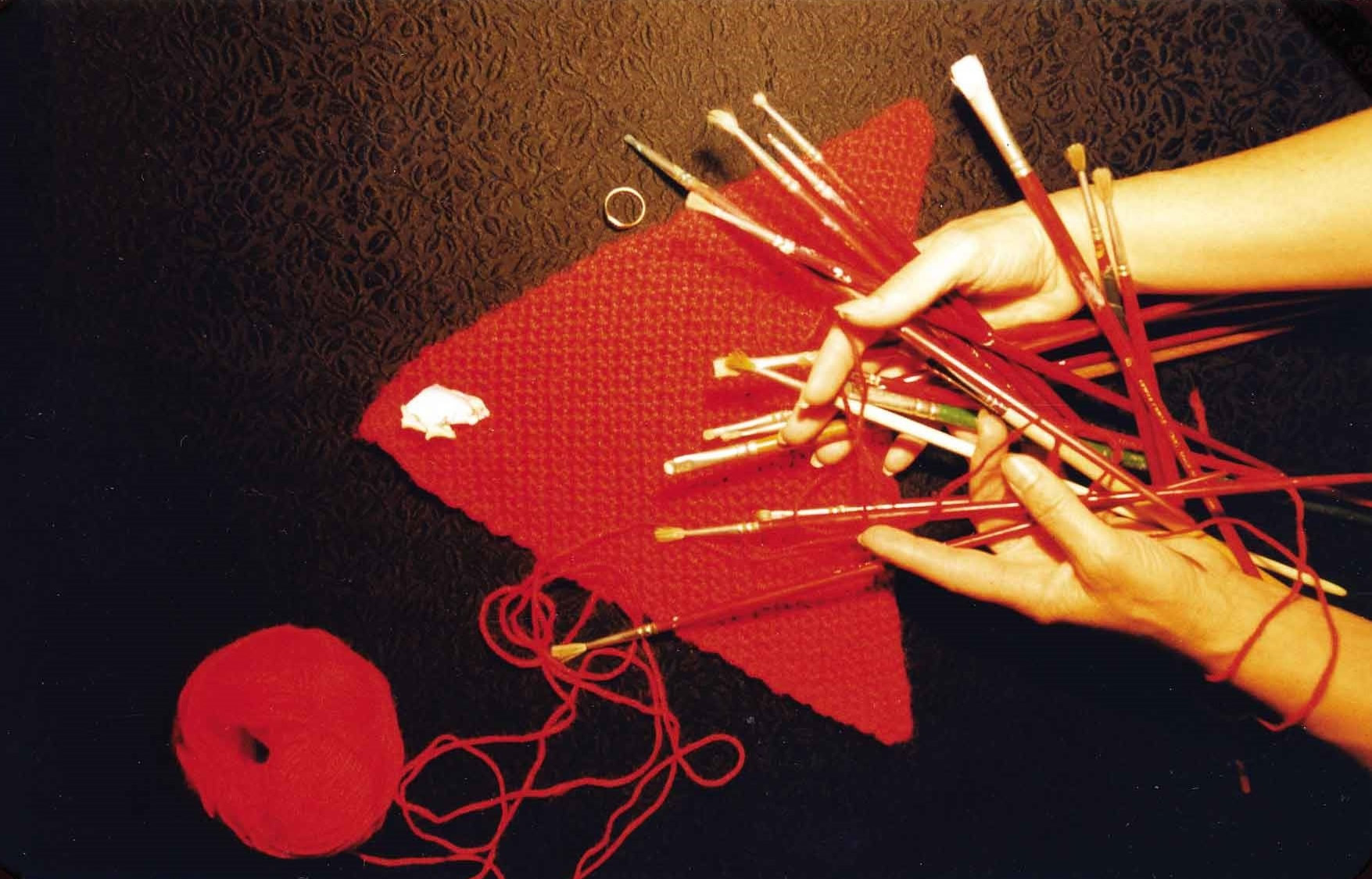
Photo by Anthèos – Social Sculpture. Living Sculpture
TEXTILE ART – From brushes to weaving
Most of the works I have created since the late 1990s honour a real and symbolic Weaving, expressed in nature and/or in the urban environment, combined with the most varied forms of Public Art, Land Art / Earth Art, Sharing Art (Participatory Art), Urban Art, Body Art, extended into Video Art, Writing Art and Actions of civic commitment…
See Social Sculpture and Living Sculpture, hypertext dossier: The Social Sculpture
I redefine and practise Textile Art in an all-embracing way:
- metaphorically, in reference to the vast range of meanings and interconnections that “Weaving” powerfully opens up;
- in its direct relationship with the feminine, with its ability to create life from its own body, and in memory of our Foremothers;
- in the richness of the myths and rites of antiquity;
- as the weaving of new relationships and the activation in society of new ways of living and thinking;
- concretely, as a stimulus to the revival of manual skills, in artistic forms and in quality craftsmanship… (Art & design)
In every case:
to rediscover a “handmade” world – made not only by women but by all those who “wish to revalue the values connected with the original Feminine”, in the hope that they will be recognised and present in men too, eliminating any prejudice and separating dichotomy…
to reawaken those values in the many women still stuck in a limited awareness of the authentic feminine principle, so that they are no longer more or less conscious followers of the patriarchal “way”, which must now be dismissed;
to reactivate the preservation of Nature and of life in all its forms, care, reflection, the search for harmony and beauty…
To the countless Symbolic Actions, Performances and Installations featuring the Red Ribbon – which has become my stylistic signature –
from the Seed-Ball of yarn in 1996 in Basilicata, Calabria, Molise, Lazio and Lombardy, to the Weaving of Little Webs outdoors and The Web in Matera, 1997;
to the project Textura and Textum in Participatory Art in Basilicata and several Italian regions from 1997;
to The Rhythm of Fire on Etna, Imaginifica, The Invisible Real – The Web on the Lucanian Little Dolomites, 1999;
to the Re-weaving of the Web, the Spiral Labyrinth and Arcana in Basilicata, Off Loom – Art off the loom in Lazio, Spring of the Arts in Basilicata, The Web in an urban setting for “Passaggi a Nord-Ovest” in Piedmont; Message in the Bottle I, Red Ribbon on the Door of Ariadne’s Labyrinth, Red Ribbon on Mediterranean Energy and Mantèion in Sicily and Calabria, 2000;
to Stone Document I – Experiment-action in Sicily, 2000, Stone Document II in Basilicata and Stone Document III in Calabria, 2001; to Textura, Textum and The Door of Life, installed at the Archaeological Museum in Potenza, and the weaving of little webs in Milan, 2002;
to The Red Ribbon of Life in Basilicata and Crossings I – The Iron Heart in Lombardy, 2003;
to The Spiral of Rebirth, Nest and Weaving of Little Webs outdoors in Lombardy, 2006; The Golden Mandala, The Ribbon Is the Message – Eternal Rebirth in Lombardy, 2004–2006; to The World Cup and Illustrious Witnesses in Basilicata, 2013,
are added the Works that always have a textile element as an important medium, such as RiVela Azione and The Numinous Veil in Milan and Basilicata from 2001, Convivium I in Livigno, Lombardy, 2002, and Convivium II in Potenza, Basilicata, 2003; Crossings II – Celebration in Milan, We in the Universe, Lombardy, 2005, Message in the Bottle 2 in Basilicata, 2005, Happy Contaminations, The House of the Wind, Basilicata and Lombardy from 2005, Hieros Gamos, Basilicata, 2008, etc.
Some links:
- Revelation
- The Numinous Veil
- Convivium Legnano
- Convivium Potenza
- Crossings II – Celebration, Milan
- Message in the Bottle II – video
- Happy Contaminations
- Hieros Gamos
- All performances
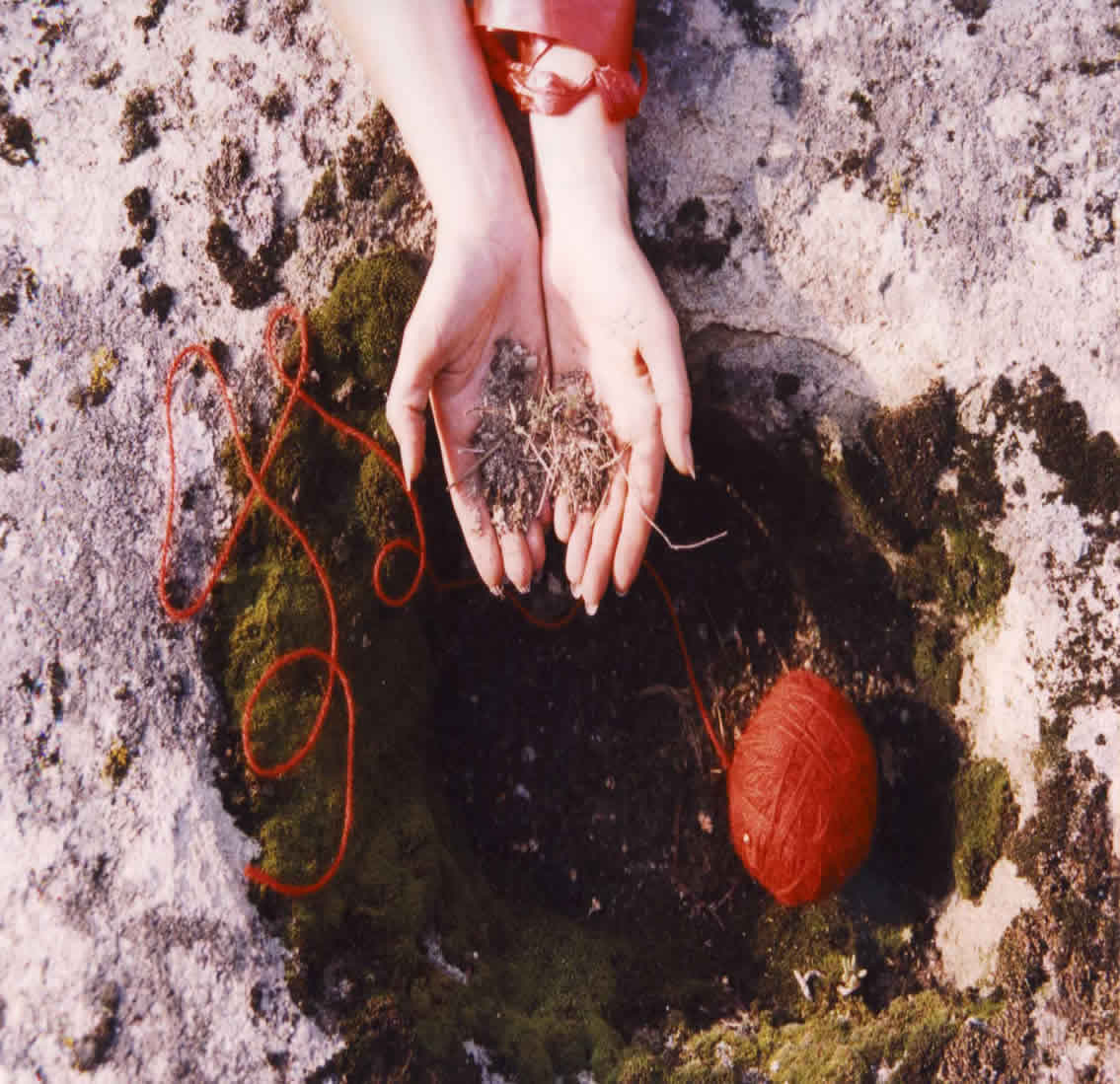
In a broad sense, however, all works that carry the intention – declared or implicit – of weaving bonds, “warping” knowledge, “wefting” beauty, “stitching back together” new relationships among human beings, with all living beings and with nature are Textile: it is a weaving of awareness, sensitivity and harmony, of a new respect for the feminine principle and for the founding values of nature and society. In this broader sense, all works in defence of the environment and all works of civic commitment are “textile” tout court…
See the dossier Social Sculpture and the hypertext Biography.
Over time, a SPECIFIC RESEARCH ON ANCESTRAL TEXTILES has interwoven with the Works, leading to exhibitions and talks, such as the one on Anatolian rugs… An old passion which – begun in Paris, alongside linguistic and anthropological studies at the Sorbonne, and then strengthened in Italy through studies and interesting publications, including those of Ugo Tolomei and Giovanni Curatola on “oriental rugs” – underwent a radical change in its interpretative parameters after encountering, in the early 1990s, Marija Gimbutas and her revolutionary discoveries, without disdaining the contemporary contributions of the research of Dario Valcarenghi in Milan, author of Kilim Anatolici (1985) and Storia del Kilim Anatolico (1994), and of Maurizio Cohen and Lucilla Ringetti in Rome, of the cultural association “Il Tappeto Parlante” and the Casa di Nepi, with the beautiful exhibitions The Dragon and the Phoenix, fragments of silk and history (1996); Clouds to wear: Ikat, Central Asian textiles and garments (1996); Red Rugs of the Tensift Valley (1998–1999) and their publications… and the Weaving goes on…
Teri Volini, biophilic artist, weaver
Also on the blog: Textile art – from brushes to weaving and Living sculptures
Textura, a Living Sculpture
A Public Art project – TEXTILE ART – PARTICIPATORY ART – SYMBOLIC ACTION
The artist sends the following message:
Dear friend,
I ask you to take part in this symbolic action in participatory art, which offers the chance to be not just a spectator but a co-author of the work of art.
This specific work, TEXTURA, is mainly about:
- weaving new relationships and activating new ways of living and thinking in society;
- the revival of manual skills, in artistic forms and in quality craftsmanship;
- rediscovering the meaning of a “handmade” world, made not only by women but by all those who “feel” or wish to revalue the values connected with the original “Feminine”, in the hope that they will be recognised and present in men too, eliminating any prejudice and separating dichotomy;
- preserving Nature and life in all its forms, with care, reflection, the search for harmony and beauty, and so on.
To join the project:
just make and send me a 60 x 60 cm square, “woven” in the technique you prefer: knitting, crochet, loom, cross-stitch, plaiting…
Preferably in wool or wool blend, a beautiful ruby red, wine red, blood red.
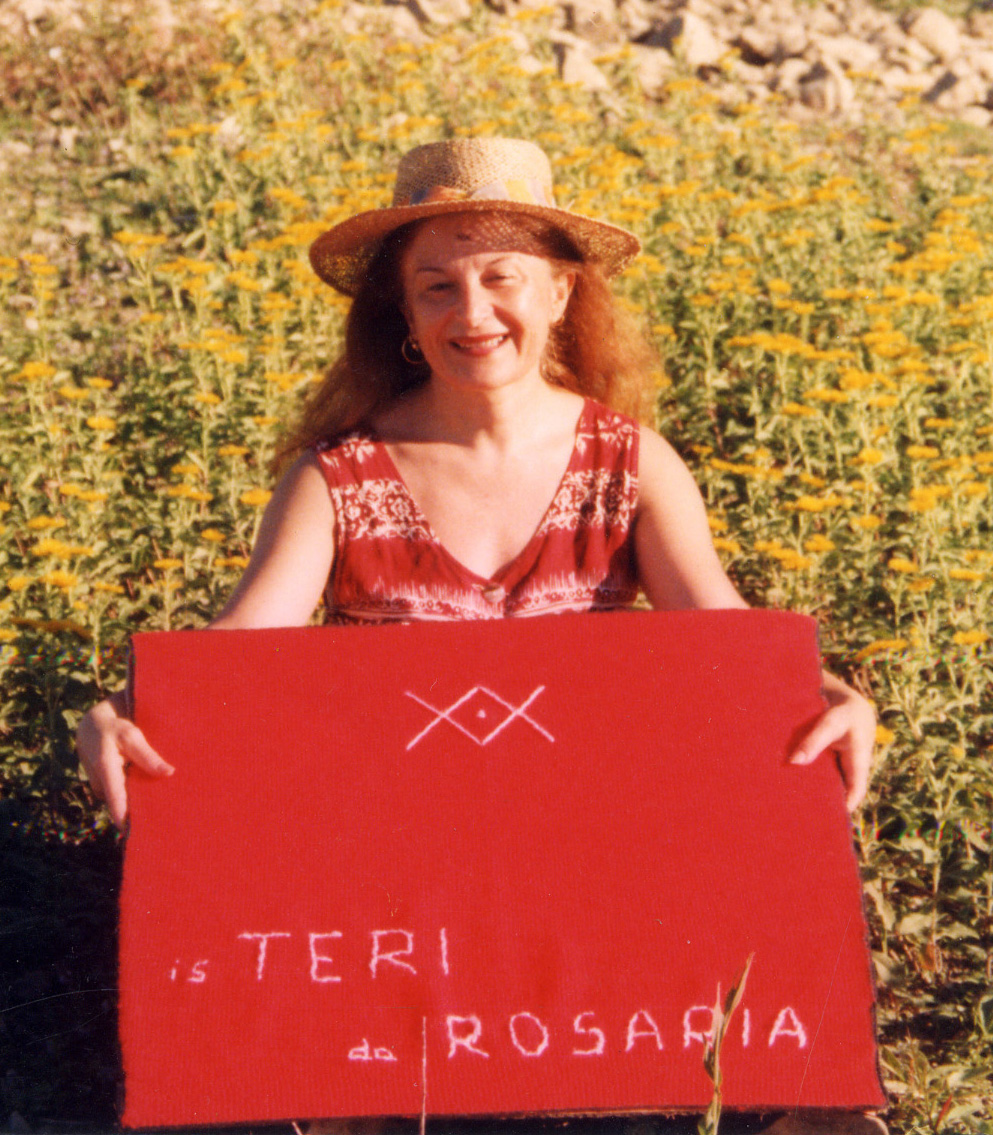
Signed underneath – with white needle and thread – with your name and that of your mother, or of whoever raised you.
Why this square? I want to join it to mine – crocheted in the simplest single stitch – to form a long red strip, like the RED RIBBON with which I conceived my symbolic journey The Dance of the Rope, but this time MADE BY HAND.
Making and sending each square will be a sign of great real and symbolic value, a testimony stronger than voice and writing, a symbol of friendship, a statement of agreement and encouragement for what I am doing as an Artist and as a woman.
Once completed and sent, the squares can be exhibited: their aesthetic perfection matters less than the very Action of making them; anyone who wishes can create something original, personalising their own.
The patches can later be used for the various Performances and Installations, with the active presence of all those who “made” them.
All this is public art, participatory art, in which the Artist catalyses the silent creative energies hidden in each of us.
I hope you will join this project of mine.
Please note: if you cannot knit or weave the 60 x 60 square by hand, you can make it another way, with a piece of fabric of the same size, still “writing” on it with needle and thread your name and that of your mother or of whoever raised you: mine, for example, is “Teri, daughter of Rosaria”.
Separately, if you wish, you can write your details on a 5 x 10 cm card, to be placed under the square during the group exhibition. Thank you in advance, and a big hug, confident of your positive reply.
Also on the blog: Textura – the project
Teri Volini, biophilic artist, weaver. Further information: +39 339 2414133 – terivolini.art@gmail.com
Textum, a Living Sculpture
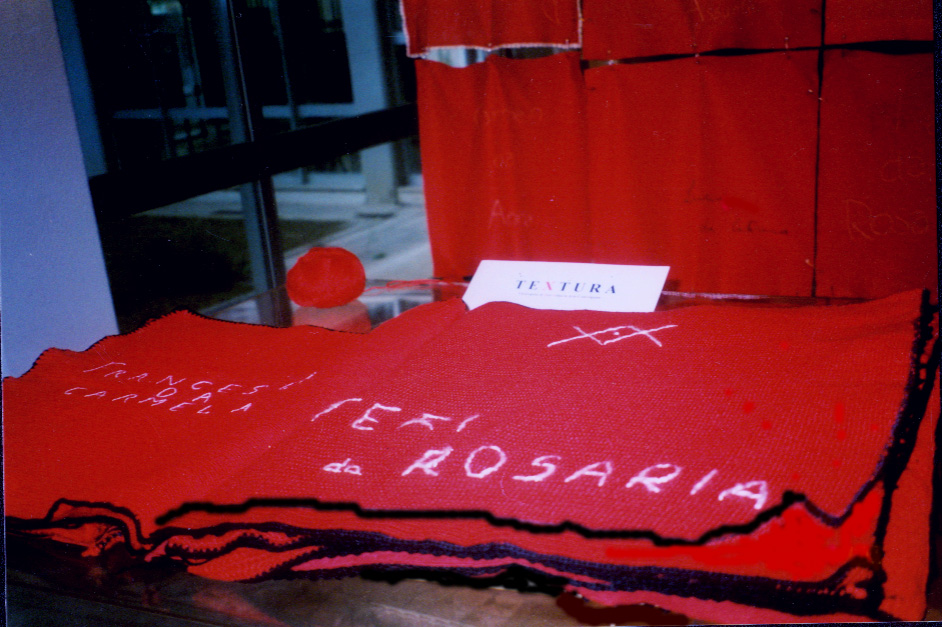
A whole book, handwoven with the 60 x 60 cm patches made and sent by some sixty people from all over Italy – and in particular from Basilicata, first of all from the women of Castelmezzano – in response to the invitation of the “weaver” artist, Teri Volini.
On the pages of the book, each participant in the collective work marked their own maternal line.
The textile squares required:
making and sending the artist a 60 x 60 cm square, “woven” in the preferred technique – knitting, crochet, loom, cross-stitch, plaiting and so on – preferably in wool or wool blend, in red: a beautiful ruby red, wine red, blood red; signed underneath – with white needle and thread – with one’s own name and that of one’s mother or of whoever raised us…
Textum is one of the first works made with the textile squares received.
It carries a new “reading” of the world, proposing knowledge of a cultural and social model little or not at all known until now, preceding patriarchal historical time, in which matrilineality was practised…
…in that society men did not exercise over women the repressive Power that would later become “the norm”…
They did not impose those restrictions which, in the later father-centred culture, could be terrible – above all the “closing off” of the woman’s very body: segregated at home, in castles, in prison-towers, subject to the extreme acts of possession of the dominant male who, to be certain of “paternity”, would impose exemplary punishments and frantic prescriptions such as chastity belts, to name just one of the many horrors perpetrated during patriarchal historical time. Not to mention war and violence as a system.
From Teri Volini’s research Matrilineality, a different social model
TEXTURA
A HANDMADE TEXTILE SQUARE
SYMBOLICALLY POWERFUL IN ITS COLOUR – RED –
AND IN ITS SIZE – 60 x 60 cm
A SIGN OF GREAT REAL AND METAPHORICAL VALUE
A CONCRETE TESTIMONY
STRONGER THAN SPEECH AND WRITING
A STATEMENT OF AWARENESS,
OF BELONGING, OF INTERACTION.
SIMPLY MAKING THE RED SQUARE,
IN THE WAY EACH PERSON CHOOSES,
EXPRESSES AGREEMENT WITH, AND SHARING OF, THE VALUES
THE WORK CARRIES;
IT MEANS TAKING AN ACTIVE PART IN A PROJECT
OF PARTICIPATORY ART,
IN WHICH THE SILENT CREATIVE ENERGIES HIDDEN IN EACH OF US ARE AWAKENED, SO THAT EVERYONE CAN BE A PROTAGONIST AND AN “ARTIST”.
To take part in the Textura project, which involves making 300 red squares: +39 339 24 14 133 – terivolini.art@gmail.com – Delta Centre for Art and Culture
LET US WEAVE TOGETHER WISHES, DREAMS, HOPES
LET US WEAVE TOGETHER NEW HARMONIES
LET US WEAVE TOGETHER NEW RELATIONSHIPS
LET US WEAVE TOGETHER A HANDMADE WORLD
LET US WEAVE TOGETHER A WORLD OF PEACE
Note – Living Sculptures
All the Artist’s works are Living Sculptures, in the sense redefined by Teri Volini herself as a linguist: “an artistic work and action referring to everything that is in the flow of life”. She considers it inadequate to reserve the term Living Sculpture exclusively for “structures made with plants or natural elements”: it seems too limiting to confine such a precious term – which calls life in its flow as a witness, and has no synonym worthy of replacing it – to outdoor works, often purely decorative in gardens; so, as a re-semanticiser, she claims the right to a “due re-appropriation” of the term, to include artistic works and actions referring to everything that is in the flow of life and/or contributes to it, including by activating a new awareness.
The Door of Life, a Living Sculpture
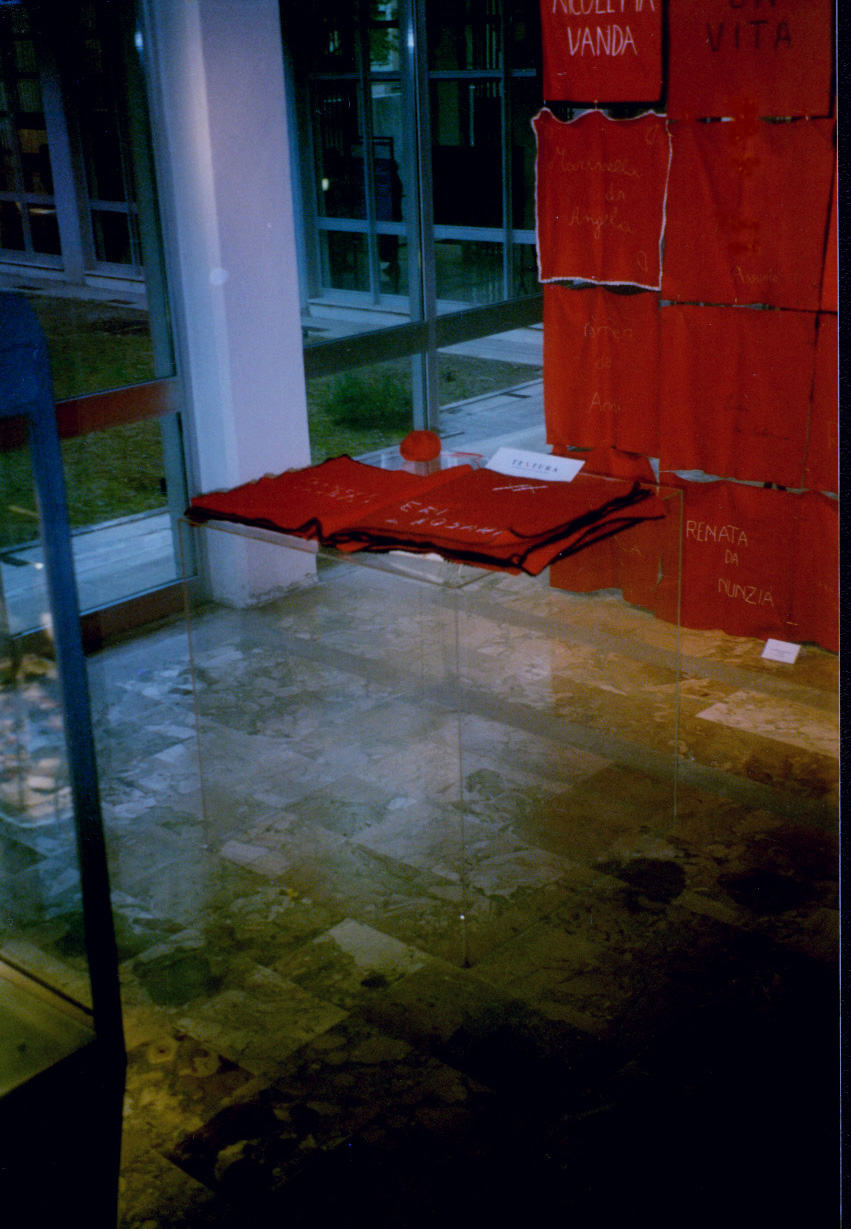
A large panel, about 3 x 3 m, with red “patches” made in an alternative way since, in the invitation to the project, the artist wrote:
“If you cannot knit or weave the 60 x 60 square by hand, you can make it another way, with a piece of red fabric of the same size, still ‘writing’ on it with needle and thread your name and that of your mother or of whoever raised you; mine, for example, is Teri, daughter of Rosaria.”
Pupils from several secondary schools in Potenza also took part, involved by Teri Volini as a visiting professor for Opera Prima through an installation – video – preparatory action for Textura, and a talk.
The patches were then used for the exhibition in Textile Art, Public Art and Participatory Art at the Provincial Museum of Potenza, 14–30 May 2002, comprising a double installation, The Door of Life and Textum:
- The Door of Life, in participatory art: a large panel, about 3 x 3 m, made of red patches and safety pins; the squares were made in the alternative way, rather than handwoven.
- Textum: a whole textile book, made with the squares handwoven by some sixty people, who signed their maternal line on its “pages”.
The common denominator of the two ways of making them – the Colour Red and “writing” on them, with white needle and thread, one’s own name and that of one’s mother, nurse or whoever raised us – leads back to the concept of the matrilineal line, drawn from research on ancient societies where that system prevailed…
THE DOOR OF LIFE, the second participatory art realisation of the TEXTURA project, together with TEXTUM, bears witness to it.
In the most ancient cultures matrilineal descent prevailed: sons and daughters were named after their mother. This depended on a different family and group organisation, and on a different social regard for the feminine. Women held a central place in the family – not in a conception of “power” and command parallel to the one that would characterise the later patriarchal system, but rather of natural authority, following the recognition that life “sprang” from their bodies…
From Teri Volini’s research Matrilineality, a different social model
Imaginifica, a Living Sculpture
In Textile Art, Land Art, Public Art, Participatory Art. Basilicata, 1–28 August 1999
In the Hall of sacred weaving
The Triangle pointing downwards is the archetype that most effectively represents the pure energy of the Feminine.
The yantra of the yoni, in its very form a symbol of woman, is a sacred area, a point of transmission of subtle forces, a Door to cosmic mysteries, leading back to the Great Mother, Source of life, Womb of the universe…
The preciousness of the feminine
With red woollen thread the Artist made twenty-eight triangular Textile Sculptures. Teri Volini made the triangles entirely by hand, with crochet hooks that had belonged to her mother Rosaria and her aunt Marietta, who used them magnificently throughout their lives for works of great beauty…
She then completed the Work by “personalising” the triangles, applying to each textile sculpture details in gold, silver, antique silver, filigree, semi-precious stones, pearls, medals, rose petals, the tiger-striped flower of a succulent, almond shells and other materials.
28 days of absolutely uninterrupted work, in August 1999, “weaving” one triangle a day – the symbolic action of struct/uring being linked to the lunar/menstrual cycle.
The work later featured in several Performances, Installations and open-air Compositions – on sandy beaches, lawns, trees, etc.
Also on the blog: Imaginifica, a living sculpture and Homage to Marija Gimbutas
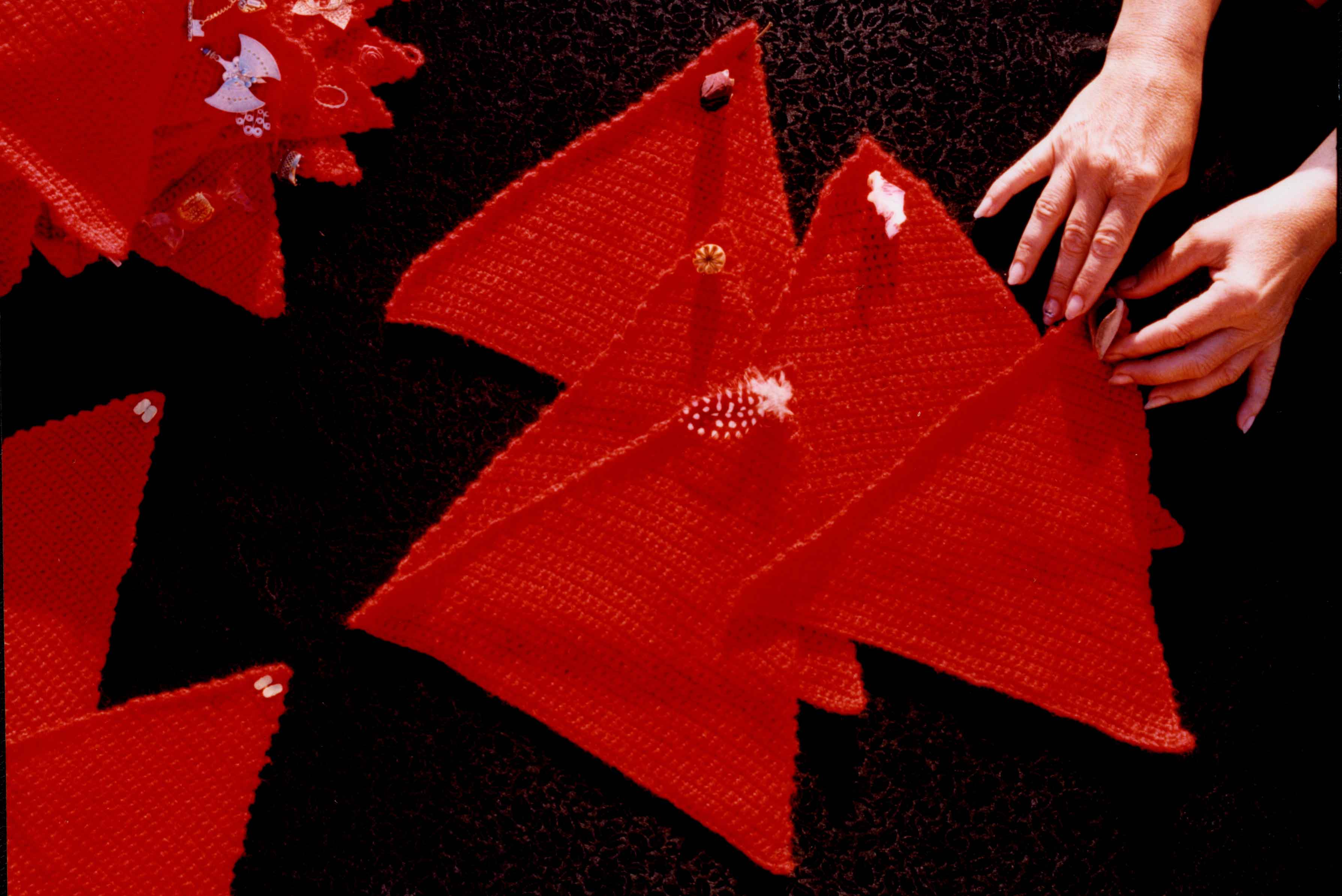
The preciousness of the feminine. Twenty-eight triangular Textile Sculptures, with applications in gold, silver, antique silver, filigree, semi-precious stones, medals, feathers, rose petals, the tiger-striped flower of a succulent, almond shells and other materials. Potenza, Basilicata, 1–28 August 1999
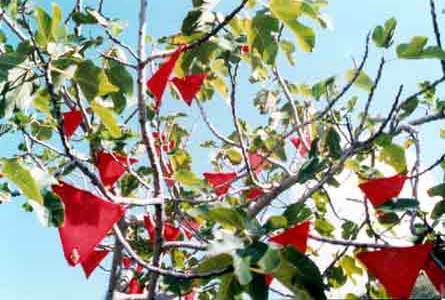
Installation of the 28 textile sculptures on a fig tree. Parco Purità – Santa Maria di Ricadi (VV), Calabria, early autumn 1999
An estranging, exceptional open-air installation, in the playful awareness and expression of being One with Mother Earth and with all her elements; an affirmation of the special harmony between woman and nature, of that fertile union that recognises and promotes the preservation of life in all its manifestations…
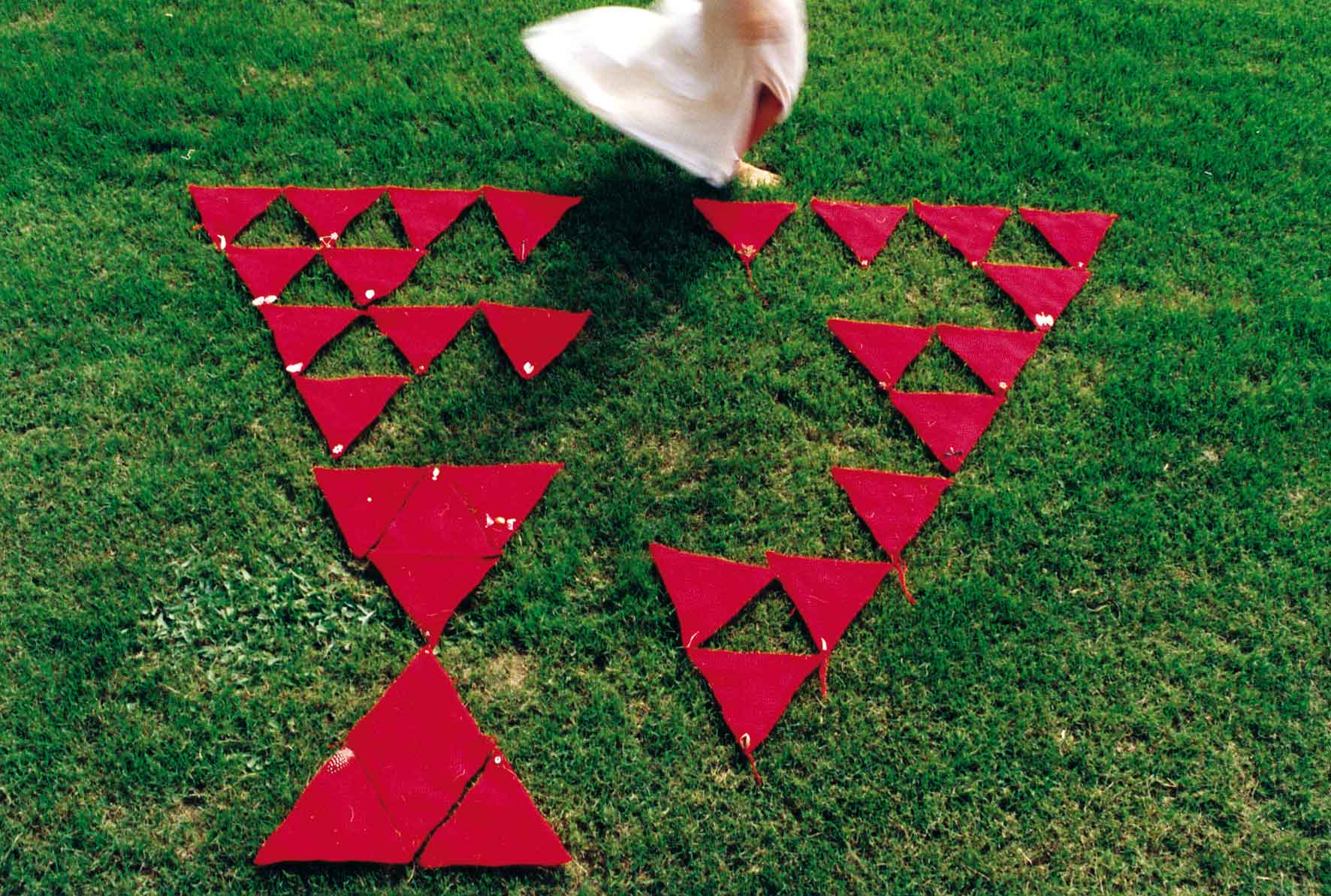
Performance / Installation / Composition of symbolic geometric forms. The Textile Sculptures were repeatedly arranged in sacred and symbolic geometries of various shapes and sizes, in nature, on the grassy ground of Prato Purità, with several Performances. Santa Maria di Ricadi, early autumn 1999
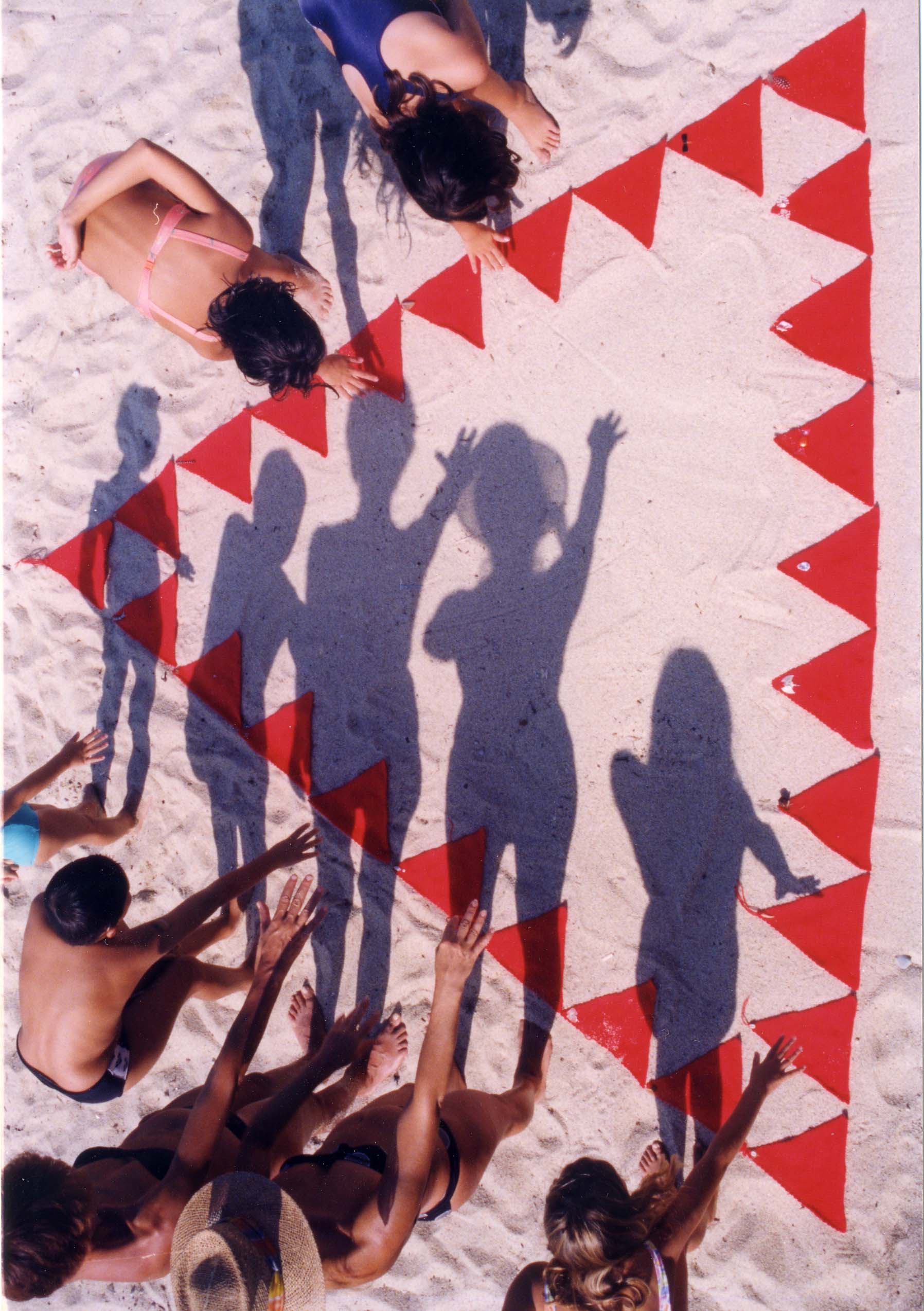
Light and Shadow – a symbolic action in participatory art with friends, children and girls, on the installation of the 28 Textile Sculptures on a sandy beach. S. Maria di Ricadi, Calabria, early autumn 1999
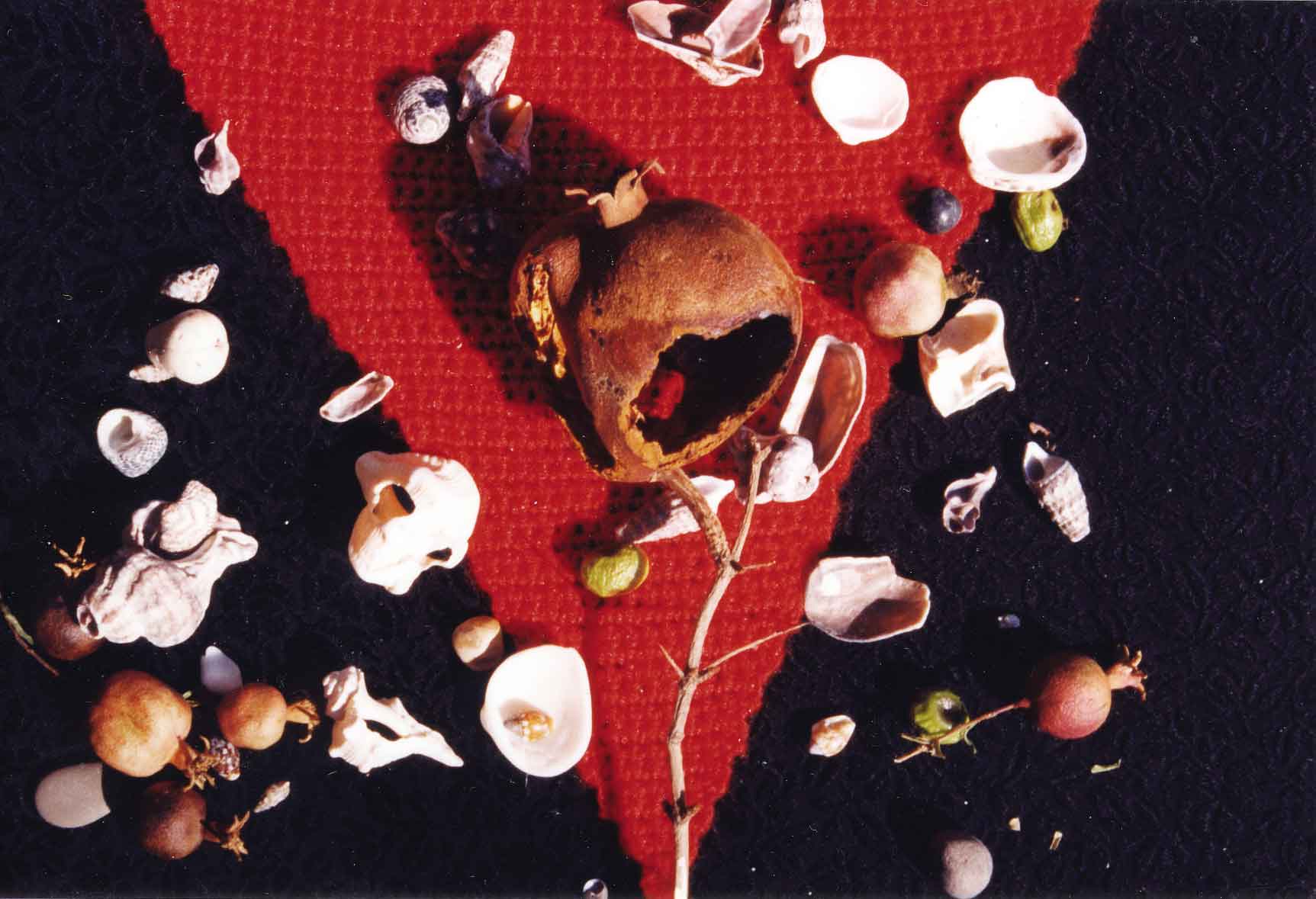
Compositions by Anthèos with natural elements on some of the Textile Sculptures, on black relief fabric belonging to the Artist’s father, Rocco Volini. Santa Maria di Ricadi, Calabria, autumn 1999
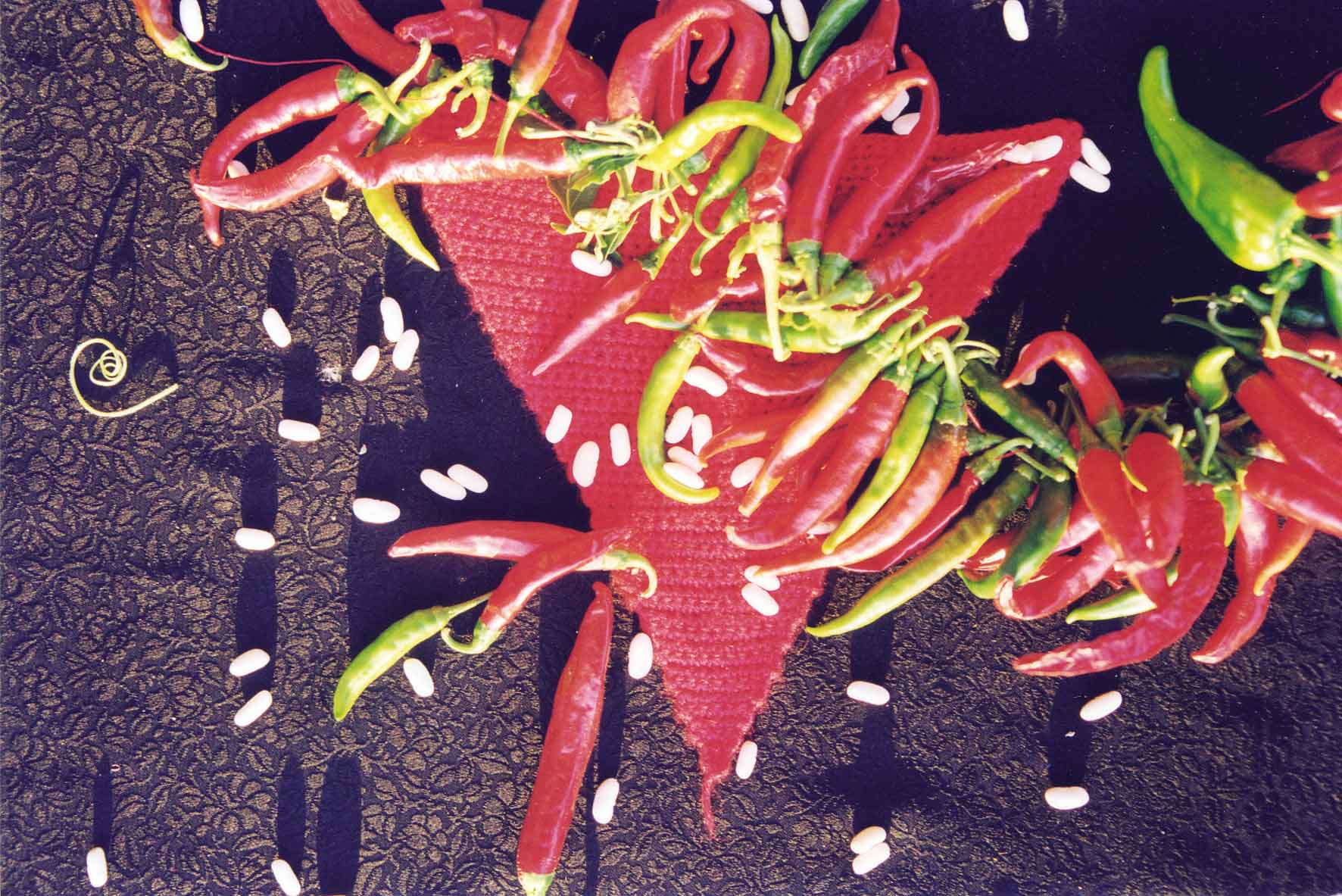
Compositions by Anthèos with flowers and fruits of the earth on some of the Textile Sculptures, on black relief fabric belonging to the Artist’s father, Rocco Volini. Santa Maria di Ricadi, Calabria, autumn 1999
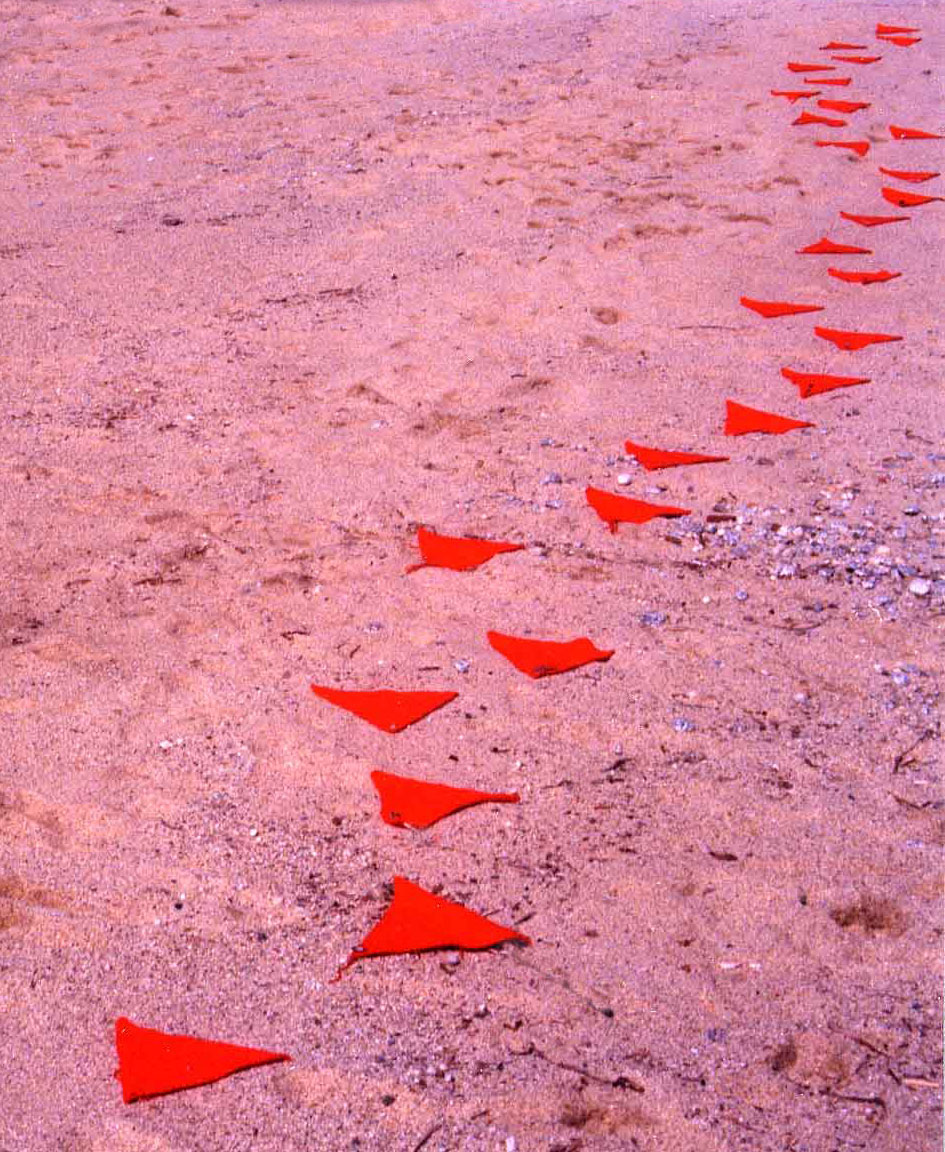
Traces from very far away – installation of the 28 textile sculptures on a sandy beach; a symbolic action in participatory art. S. Maria di Ricadi, Calabria, autumn 1999